Twitter share

Tuesday, August 28, 2007

Stolen Art Watch, Da Vinci Theft 4 Years on !!


Police renew da Vinci theft plea

Detectives have renewed an appeal for information about the theft of a Leonardo da Vinci painting from a castle exactly four years ago.
Madonna with the Yarnwinder was stolen from Drumlanrig Castle, near Thornhill, in Dumfries and Galloway in 2003.

Detectives said they were still determined to find the painting, which belonged to the Duke of Buccleuch.

However, they admitted that they were no closer to catching the culprits, with no current lines of inquiry.

The artwork, which was painted between 1500 and 1510, had been in the Buccleuch family for almost 200 years.

Valued at about £30m, it depicts the Madonna with the infant Jesus holding a cross-shaped yarnwinder.

The painting was stolen in a raid involving four men. Two of them posed as visitors before overpowering a female staff member.

All four then made their escape in a white Volkswagen Golf, which was found abandoned nearby.

The painting was added to the FBI's list of the 10 most wanted pieces of stolen artwork in 2005.

A substantial award is available for information which leads to the recovery of the work.

Det Ch Insp Michael Dalgleish, of Dumfries and Galloway Constabulary, said: "Police in the region are still determined to recover the painting and bring those responsible for this crime to justice.

"However, we concede that there are currently no lines of investigation open to us.

"Consequently, we are renewing our appeal for information and are urging anybody who may have knowledge of the crime or whereabouts of the stolen painting to come forward."


Art Hostage comments:


Currently the Da Vinci is being held hostage by elements of Organised Crime.


The Duke of Buccleuch has purchased legal title back from the insurers, earlier this year for an undisclosed sum.


The Da Vinci was insured for the full amount, not for just £3 million as reported in the media.


The Duke of Buccleuch has a residue of £10 million plus to spend trying to recover the Da Vinci.


The Usual suspects of ex-Police art detectives have all been beating a path to the door of the Duke of Buccleuch with false promises of recovery as a lure to fund their expensive junkets.


The Duke of Buccleuch would gladly pay a reward of several million pounds to the person who reunites him with the Da Vinci.


Police however, will not issue a letter of absolute discretion, "Comfort Letter" before recovery and will refuse post-recovery.


Therefore, any payments made by the Duke of Buccleuch will be unlawful.


This unlawful act of payment is being used to lure intermediaries into a false sense of security.


Unfortunately Dick Ellis jumped the gun with his audacious recovery of the Bonnard etc and exposed the truth behind recovering stolen art lawfully.


Every negotiation about the Da Vinci is preceded by referring to the Dick Ellis Bonnard recovery and lawful contracts are being demanded under guidance of a lawyer before any more recoveries are made.


Read the account of how Dick Ellis recovered all three pictures, like taking candy from a baby, below:


Detective Sergeant Vernon Rapley current head of the diminishing Scotland Yard Art and Antiques Squad said, and I quote


"I would rather the Da Vinci not be recovered than see any reward money paid, if the Da Vinci is recovered without arrests £50 pound is all I would allow to be paid"


Mark Dalrymple, the Art Loss adjuster, who was assigned to the Da Vinci case when legal title was owned by the insurers, was purposely vague when he offered a reward, £100,000, £200,000, he even said £1 million was available as reward, when he spoke at an Art Crime conference in London.


He did concede his hands were tied and could not, under any circumstances, pay a reward without a letter of absolute discretion, comfort letter. from Police.


Anyone who pays a reward unlawfully, including the Duke of Buccleuch, leaves themselves open to prosecution and blackmail, even if this unlawful payment results in the recovery of the Da Vinci.


Lord Rothschild tried going down the direct avenue to recover his stolen gold boxes, see back-story below:


The Rothschild boxes remain outstanding and Lord Rothschild was told he faced prosecution if he privately recovered his gold boxes and paid a reward.


Perverse as it may seem, the current handlers of the Da Vinci have floated the idea within Underworld circles of stealing another high profile artwork worth millions to hold whilst the Da Vinci deal is arranged.


If the Underworld gets stung on the Da Vinci they still retain the second high value artwork.


If the Da Vinci deal goes as according to the deal, then the second artwork is returned for free.


This constant Cat and Mouse game will only be broken when a reward of several million is signed into a legal agreement between the informant, his lawyer and Police, that enables the informant to provide the necessary information knowing the reward will be paid lawfully and under a binding legal contract.


If offered then I am sure Underworld figures would provide information leading to the recovery of the Da Vinci and even a few arrests for good measure.


However, Police would try and demand the original thieves and all the handlers, rather than some "Patsy" handler, who's excuse will be they were only looking after it for a friend, or did not know how it got there, or someone saying they bought the Da Vinci at a Car Trunk/Boot sale.


So, all the time it is only ex-Police officers who can claim rewards, informants will be reluctant to offer their services.


Ex-Police officers will still try and offer false promises of reward to gullible informants hoping for a break whilst still billing the victims for junkets.


Every so often someone will fall for the ruse and a stolen artwork will surface, the informant will be told to "Move along, nothing more to see here"


The really high profile stolen artworks will remain out of reach, unless political forces allow a special, private, government authorised recovery, like that of the Turners, belonging to the Tate Gallery.
This was clear "buy back" sanctioned by the powers that be.
All investigations into how the Tate recovered their stolen paintings have been suppressed by the establishment and media whores.


Make no mistake, any reward money that is paid will go to someone who has knowledge of the crime and subsequent handling, be that an ex-police officer investigating, an informant using inside information, and of course those handling and their friends.


It is at what level payments can be made and be acceptable is the question.

At the moment it stops at ex-police officers.


I do fear however, that any successful attempt to sting the people holding the Da Vinci may prove fatal and only act as a further incentive to commit further, more violent art crimes against an ever vulnerable wealthy art collecting community.
A dilemma for authorities that helps explain the lukewarm plea for help in recovering the Da Vinci, 4 years on.
The Da Vinci has become a Pawn and the paradox is, by not recovering the Da Vinci in a sting operation, authorities are preventing a backlash.
To be continued................................


Saturday, August 25, 2007

Stolen Art Watch, Drones With A Sting in An Irish Oligarchy !!


Artwork stolen Culloden Hotel


A painting by one of Northern Ireland's best-known artists has been stolen from a hotel.


Holywood Harbour, an oil painting by Brian Ballard, left, was discovered missing from the luxury Culloden Hotel in Co Down, on Thursday morning.It is estimated to be worth around £15,000


Police have appealed for anyone offered the painting for sale to contact them.


The theft is believed to have taken place within the past two weeks.


Art Hostage comments


Would it be a dam cheek, if whilst checking out a Hotel to hand back the Stolen Gardner Art, the u,mm's helped themselves to this artwork?


Unlike the Palestinians, who never miss an opportunity to miss an opportunity, these fast moving, quick thinking Drones with a sting, how Plato would describe them, saw a chance to gain another artwork with little risk for their days wages.


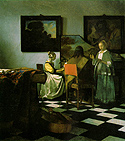
The Stolen Vermeer must be given back in a fashion that does not involve an exchange.


Because of legal restraints anyone giving back the Vermeer expecting something in return will be arrested and will not receive any reward.


However, if a deal is reached before the recovery, the Vermeer can be recovered, via a confession box, separately and as a result of an anonymous tip off for location, via Art Hostage if I am to be the "Chosen one."


The Stolen Ballard painting is worth the £15,000 retail but only £5,000 legal trade value, £1,000 as a stolen painting and if offered back for ransom, £2,500.


The stolen Ballard painting exchanged for drugs is about an ounce of high grade Cocaine from a major drug dealer, whose bulk cost is about £800 per ounce, the drugs can sold for £2,500 street price and then the stolen Ballard can be retrieved from the drug dealer.


However, as in many art theft cases, the thieves tend to take some of the drugs and never retrieve the stolen painting.


This means the drug dealer looks to sell the stolen painting on to a Criminal venture capitalist.


The Criminal venture capitalist pays about £1,500 for the stolen Ballard and will look to sell it to some successful builder or new money art collector, who still retains the street culture although they are successful in their honest business life as a tradesman etc.


The Ballard would then become a bragging point for the new money art collector not expecting any of his friends to inform on him.


The stolen Ballard would then stay in the new money art collection until death or divorce and then perhaps would surface.


The price to this new money art collector would be £3,000 showing a 100% return for the criminal venture capitalist so there are huge profits for handling stolen art.


With the Police in re-active mode and the judiciary treating art theft as a soft crime, the stealing of high value art will remain a low risk, high profit criminal enterprise that is not only traumatic for the victims, but also really makes people pissed when public artworks are stolen and removed from public view.


Tuesday, August 21, 2007

Stolen Art Watch, Gardner Art For Lighter Sentence ??


Armagh men held in joint op

Two men from Armagh were being questioned about a £350,000 drugs seizure in Co Donegal.


They were detained in Falcarragh in an operation involving police on both sides of the border.

Garda confirmed that 50kg (110lb) of herbal cannabis with an estimated street value of 500,000 euros (nearly £350,000) was recovered in the village`s main street on Monday afternoon.


The two men, aged 47 and 25, were taken into custody for questioning at Letterkenny.

A house in the Ballyness area of Falcarragh, as well as a house in Armagh, were also searched as part of a follow-up operation which also involved Customs officers.


It is believed the drugs came in from Amsterdam through Dublin Airport.

They are thought to have been transported in a container of computer parts.


Art Hostage comments:


It is interesting to note that those who claim to have access to the stolen Vermeer etc from the Gardner Museum in Boston, Mr Sheridan and Mr McGinley, who Charlie Hill has been courting, are connected to this drug bust.


Interesting Charlie Hill has been in Spain negotiating with ex-pat Irish godfathers about the Gardner Art and then this drug route is exposed.


Pursuing stolen art is one thing, drug busting is certainly more dangerous and something that should be avoided if at all possible.


Interesting to note the solicitors acting are:


Sheridan & Co

Main Street, Lr Letterkenny

Donegal

074-9128811


Mcginley & Co

74 Upper Main Street, Letterkenny

Donegal

074-9127059


Interesting to note that the arrested men are from Armagh, stronghold of the South Armagh IRA Brigade, historically lead by by General Thomas Slab Murphy.


With all of this double-dealing going on I hope the Gardner Art will not be damaged during the sting operation.


Why can't authorities offer a lighter sentence for the recovery of the Gardner Art?


At least then the Gardner Art can surface via a confession box, undamaged and not used as a bargaining chip to trap criminals.


It is about time the Gardner art is plucked from the clutches of the underworld before sting operations drive it deeper and out of sight for another decade or so.


Actions speak louder than words, make the deal before it is too late.


Sunday, August 19, 2007

Harry Potter Author To Profit From Crime, Art Crime ???


Report: J.K. Rowling Writing Crime Novel

By DAVID STRINGER

The Associated Press
Sunday, August 19, 2007; 1:01 AM

LONDON -- J.K. Rowling has been spotted at cafes in Scotland working on a detective novel, a British newspaper reported Saturday.

The Sunday Times newspaper quoted Ian Rankin, a fellow author and neighbor of Rowling's, as saying the creator of the "Harry Potter" books is turning to crime fiction.

"My wife spotted her writing her Edinburgh criminal detective novel," the newspaper, which was available late Saturday, quoted Rankin as telling a reporter at an Edinburgh literary festival.

"It is great that she has not abandoned writing or Edinburgh cafes," said Rankin, who is known for his own police novels set in the historic Scottish city.

Rowling famously wrote initial drafts of the Potter story in the Scottish city's cafes. Back then, she was a struggling single mother who wrote in cafes to save on the heating bill at home.

Now she's Britain's richest woman _ worth $1 billion, according to Forbes magazine _ and her seven Potter books have sold more than 335 million copies worldwide.

In an interview with The Associated Press last month, Rowling said she believed she was unlikely to repeat the success of the Potter series, but confirmed she had plans to work on new books.

"I'll do exactly what I did with Harry _ I'll write what I really want to write," Rowling said.

The office of Rowling's literary agent, Christopher Little, was not immediately available to comment late Saturday.


Art Hostage comments:


I wonder if J.K. Rowling will draw from her own experience at being a target of Country House Art Thieves ??
see below for back-story


Tuesday, August 07, 2007

Picasso's Recovered in Daring Swoop !!


Update: http://www.iht.com/articles/ap/2007/08/07/europe/EU-GEN-France-Picasso-Theft.php


Three Picasso paintings stolen in Paris secured


French agents on Tuesday secured three paintings by Pablo Picasso, which had been stolen in Paris in February, the daily Le Figaro reported.

The perpetrators had been detained, the report said.

The pictures, worth more than 50 million euros (69 million dollars), were stolen from the apartment of Picasso granddaughter Diana Widmaier-Picasso.

The pictures had vanished without a trace and caused the Paris police problems because there were no traces of a break-in. Police suspected that the perpetrator had had intimate knowledge of the apartment.

The recovered paintings were portraits of Picasso's daughter Maya and his second wife Jacqueline.


Art Hostage Comments:

Inside job, credit to law enforcement for smoking these paintings out.

The revolving door of art theft and recovery turns slowly in the recovery direction, a little glimmer of hope perhaps?

Sadly, when professional criminals steal art it is much harder to recover than if a close family person is involved.


Update:


Stolen Picassos recovered

THREE people in possession of three works by Pablo Picasso stolen from the Paris flat of the artist's granddaughter have been caught by French police.

The paintings were stolen as she lay sleeping in February.

Police surveillance teams arrested the three suspects this morning in the 16th arrondissement of Paris. They have been detained awaiting charges as inquiries continue.

The two paintings and a drawing by the Spanish master, worth more than €50 million ($80.5 million), were taken from the flat of Diana Widmaier-Picasso overnight on February 26.

"The works are apparently in good condition," said Ms Widmaier-Picasso's lawyer Olivier Baratelli.

The thieves had made off with the 1961 Portrait of Jacqueline, depicting Picasso's second wife and Maya with Doll, a painting of the artist's daughter from 1938.

The stolen drawing was called Marie-Therese at age 21.

The paintings were on display in the apartment, in the chic Left Bank area of Paris, but security precautions had been taken to protect the works, according to family lawyers.

Maya with Doll is one of Picasso's classic oil paintings in bright shades of green, blue and red and depicting young Maya in pigtails holding a doll and a small wooden horse.

Maya was Ms Widmaier-Picasso's mother, born to Marie-Therese Walter, who was one of Picasso's many female companions.

Art dealers had agreed that the paintings were not sellable, given their masterpiece status, and were bound to reappear eventually.

Picasso's 1905 masterpiece Boy with a Pipe remains the most expensive painting ever sold since it was auctioned in New York for $US104.2 million ($121.51 million) in May 2004.

Picasso died on April 8, 1973 at his home in the southern French town of Mougins. He was 91.


Monday, August 06, 2007

Stolen Art Watch, Outrageous Offer To Return Gardner Art


Art Hostage has learnt that an outrageous offer has been made to non other than the much maligned Charlie Hill.


Whilst Charlie Hill was in Spain recently a contact close to the Irish ex-pat Underworld Godfathers, who hail from near Alicante, made an outrageous offer.


If Charlie Hill could arrange to have Declan Duffy killed or arrested and thrown back in jail, preferably for 30 years, the Irish Underworld Godfathers would facilitate the return of the stolen Gardner Art, including Vermeer's "The Concert"


It seems that Declan Duffy has become a stone in the shoe for the Irish Godfathers, who have failed in recruiting a hit man to whack Mr Duffy.


Charlie Hill is trying to get Mr Sheridan and Mr McGinley to recruit Declan Duffy/Dessie O'Hare and when Declan Duffy/Dessie O'Hare have possession of the stolen Gardner Art they will be arrested and the Gardner Art will be recovered.


Trouble with this plan is a gun battle could ensue and damage could be done to the Gardner art. Also whatever art is outstanding will be destroyed.


Seems the Irish Underworld has no qualms about using Law Enforcement to eliminate its rivals, even breaking the supposed code of silence to set up Declan Duffy and Dessie O'Hare.


Furthermore, the gang who lost the load of Cocaine at Mizen Head have replaced a third of it, 500 kilos since their loss.


It is interesting that the Art Hostage plan of offering things other than the supposed reward money may smoke out the stolen Gardner Art.


However, killing an underworld rival of those who control the Gardner Art is certainly out of the question, unless of course Dick Ellis calls on his contact Brigadier Gordon Kerr !!


Gang members released after questioning by gardai


By Alan O'Keeffe


Monday August 06 2007


NINE members of a gang suspected of involvement in the beating and torturing of a young man held captive in a Dublin house have been released without charge.


A file is now being prepared for the DPP after the victim of the horrific attack was found tied up, gagged and naked in the bathroom of a house in Tallaght raided by armed gardai.


Eight men, including INLA boss Declan Duffy, and one woman were arrested in the swoop on the home.


The victim, found bleeding and in great distress, was taken to Tallaght hospital where he was treated for his injuries.


Gardai believe the 21-year-old victim, a member of a business family, was in danger of suffering further serious harm in the house had the detectives not swooped to rescue him.


The bathroom where the victim was imprisoned was covered in his blood.


Members of the garda Emergency Response Unit went to the house on Friday evening after receiving intelligence that a man had been kidnapped and was being held against his will.


All nine people were arrested within the vicinity of the house.
The nine were aged between 19 and 43.


INLA boss Declan Duffy is believed to have taken control of the criminal organisation in Dublin since his release from prison last February.


Duffy was imprisoned for nine years on charges of false imprisonment and firearms possession following the notorious 'Ballymount Bloodbath' in 1999 which resulted in the death of INLA man Paddy 'Bo' Campbell.


Members of the INLA in Dublin, reportedly involved in the illegal drugs trade, are believed to be involved in a number of attempts to extort cash.


To be continued...............................


Clifford Hobbs, has been arrested in Spain, inside job, a trade off, expect some really nasty underworld gang wars to start.


James Hurley is going to be arrested next as Scotland Yard/S.O.C.A. and Interpol have located him and are just getting the International arrest warrant renewed.


There is a reward of £30,000 for the capture of James Hurley.


A claim for the £50,000 reward for the capture of Clifford Hobbs has already been submitted to London Scotland Yard, however, the informant has already been told it is £25,000 for Clifford Hobbs and £25,000 for the capture of Noel Cunningham.


At a Top Secret meeting earlier this year, at which senior members of Organised Crime met with Top Law Enforcement officials, including Interpol, S.O.C.A. and the FBI, certain disruptive dangerous criminals were discussed.

These criminals had become a embarrassment and "Stone in the Shoe" for Authorities as well as Top members of the Global Organised Crime syndicate, which includes members of the C.I.A.


It was decide that certain criminals would be given up and others would be framed and put behind bars for a long time. They were seen as upsetting the balance of global criminal activity and their presence could affect not only criminal dealings, but also the war on terror, via the Heroin trade.


Art Hostage lobbied for the return of the Gardner Art as a Pork Barrel, a side dish, but it seems to be a low priority.


However, as this conspiracy develops the Gardner Art may surface just when you least expect, or that is what I am told.


Hope springs eternal, I'd settle for the Vermeer as an appetiser, please, pretty please !!


Record crop of Afghan Opium this year 3,000 tons, Taliban's biggest mistake was to try and stop the Opium trade, more than their relationship with Bin Laden, Air America back in business, I only want the Gardner Art, surely this is not too much to ask???


One to watch...................................

Wednesday, August 01, 2007

Stolen Art Watch, FBI Corners Market in Unique Stolen Art Recovery !


Press Release

For Immediate ReleaseJuly 30, 2007

Washington D.C.FBI National Press Office(202) 324-3691

FBI Announces Addition to Top Ten Art Crimes List

The FBI today announced an addition to its Top Ten Art Crimes list. A Cavalier was stolen on June 10, 2007, from the Art Gallery of New South Wales, Sydney, Australia. The self-portrait, by Dutch Master Frans Van Mieris (1635-1681), was stolen while the gallery was open for public viewing. The piece is in oil on wood panel and measures 16 x 20 centimeters, or approximately 6 ½ x 8 inches.


"The FBI is pleased to be able to work with our Australian law enforcement colleagues in an effort to bring this piece of history back to the Art Gallery of New South Wales," said Bonnie Magness-Gardiner of the FBI's Art Theft Program. "Theft of a significant work of art such as this is not only a crime against an institution but deprives both the local and international community of its cultural heritage."


The FBI initiated the Top Ten Art Crimes list in 2005. Since then, five paintings and one sculpture from four entries have been recovered: A Rembrandt self-portrait and Renoir's Young Parisian from Sweden's National Museum theft; Goya's Children with a Cart from the Toledo Art Museum theft; Munch's The Scream and The Madonna from the Munch Museum theft in Oslo; and the Cellini Salt Cellar from the Kunsthistorisches Museum theft in Vienna.


Also recovered was the Statue of Entemena from the Iraqi Looted and Stolen Artifacts entry. The current list may be found on the Art Theft Program page of the FBI's website listed below.
Persons with any information about this work of art or circumstances concerning this crime are encouraged to contact their local FBI office or the nearest U.S. Embassy or Consulate, or to submit a tip online at http://www.fbi.gov/.


Art Hostage comments:


Expect some good news soon, courtesy of FBI Icon Robert Wittman, who is on course to recover this artwork before his retirement October 2007.


The press release is just part of the choreography leading up to the recovery and fanfare that will ensue.


It's a done deal, they are closing in, take the deal while it is on the table, something is better than nothing.
Remember this, below ?
Uncanny likeness, the Cavalier and one of the bad guys ???????


Monday, July 30, 2007

Breaking news---Breaking news, Small London Museum Raided, losses run to Hundreds of thousands, Pounds, Sterling


As I write the cost is being assessed, looks like a major blow, unique artworks stolen, Public deprived of these cultural icons.

Sunday, July 29, 2007

Stolen Art Watch, Rewards being paid are like Harry Potter, a Figment of the Imagination, unless of course you are Ex-Police.


Art theft and 'rewards'


Da Vinci painting insurance payout


The owner of a stolen Leonardo da Vinci painting has received £3m from his insurers.


Madonna with the Yarnwinder was stolen from the home of the Duke of Buccleuch - Scotland's richest man - on 27 August.


The artwork is valued at between £25 and £50m and was stolen by a four-man gang at Drumlanrig Castle in Dumfries and Galloway.


A spokesman for the Buccleuch estate said complex insurance issues remain unresolved.


He said: "It would be inappropriate to comment further at this time."


Two of the men who posed as tourists overpowered a female member of staff and took the artwork.


The gang fled in a white Volkswagen Golf car, later found abandoned in woodland.
A fine arts loss adjuster said the painting was one of the most important stolen in the UK in the last 70 years.


The da Vinci work, which experts say was painted between 1500 and 1510, depicts the Madonna with the infant Jesus holding a cross-shaped yarnwinder.


It is said to symbolise the crucifixion of Jesus.
Police issued an e-fit and CCTV footage of the suspects and one of the man who bought the getaway car.
The 80-year-old Duke said the family had been "deeply saddened and shocked" by the theft.


David Lee, the art critic and Editor of Jackdaw, said: “The Da Vinci Madonna stolen from Drumlanrig Castle in 2003 is so recognisable that thieves would have a better chance of selling the Crown Jewels.

“If they have a brain larger than a pickled onion they will park it in the back of a wardrobe and sit on it for a couple of years. I suspect it will be offered eventually through a middleman at an amount tempting enough to an insurance company to pay a ‘reward’. ”


Reply From Mr The Honourable David Scully

Sir, You suggest that the Leonardo stolen from Drumlanrig Castle might “be offered eventually through a middleman at an amount tempting enough to an insurance company to pay a ‘reward’ ” (report, August 28).

It is illegal for an insurance company to pay a reward, without the express permission of the police. Permission would not be given to pay anyone connected with the crime or any middleman.

As the largest insurer of art in the world, it is our unwavering company policy not to countenance ransoms, even if paid through middlemen.

In any case, it would make absolutely no commercial sense for an insurer to pay such a “reward” as it would simply encourage the thieves to steal more art, thus diminishing our cultural heritage (and insurers’ profits) further.

Yours sincerely,
DAVID SCULLY
(Underwriting Director),
Axa Art Insurance,
106 Fenchurch Street,
London EC3M 5JE.
david.scully@axa-art.co.uk


Art Hostage Comments:

There you have it, straight from the Horses mouth, David Scully, who represents the Worlds biggest Art Insurer AXA.


Secondly, the story about the Duke of Buccleuch only recieving £3 million insurence payout is a total fabrication designed to make a reward of £100-200,000 attractive.
Mark Dalrymple has been quoted to say, at a London Art Crime Conference, and this news report, "there is £1 million reward to the right person."


We all know what Mark Dalrymple means, Dick Ellis or Charlie Hill, if they promise not to forward any money to their informants can collect the £1 million reward.


The true story is that the Madonna was fully insured for £50 million and the Duke of Buccleuch was paid out in full.

Authorities did not want to alert the Underworld to this fact as it would make ransom demands higher.

By dealing with the likes of Dick Ellis, or any other ex-police officer with regards recovering stolen art, will only ever result in "Lining Dick Ellis and other Ex-Police colleagues Pockets"

Please read this article to reveal Dick Ellis and Charlie Hill's roles in major sting operations.

I love this extract from page 2:


"n 1994 the art-and-antiques squad was on a roll. After some years in abeyance, it had been revived in 1989.


It had an immediate success, recovering several paintings stolen from the Beit collection in Ireland in 1986, and notching a further coup in 1992 when it recovered a painting by Pieter Brueghel, Christ and the Woman Taken in Adultery, stolen from London's Courtauld gallery 10 years before.


The fate of the Brueghel is illuminating. Since the Brueghel - like the Turners - was unsaleable on the open market, it is likely to have been used instead as an alternative currency within the criminal world, whose denizens like to talk of 'laying down' stolen paintings, like vintage wine, until their value can be realised.


It may also have been used as collateral for funds raised for drugs or other criminal deals. Sometimes, says Mark Dalrymple, head of the loss adjusters Tyler and Co, who specialise in the art market, these deals can become quite labyrinthine, 'and you end up with half a dozen people having an interest in the picture'.

By 1991 the Brueghel had reached a high-ranking London criminal, who decided to cash in his investment.


He commissioned four minor London villains to sell it on his behalf. Somewhat naively, they telephoned Christie's to ask how much 'a Brueghel' was worth.


Then they called the director of the Courtauld, Dr Dennis Farr, and told him they had purchased the Brueghel only to discover it was stolen - and the Courtauld could have it back for £2m. Both Christie's and Farr told the art-and-antiques squad about the gang's approach.


The squad's head was Dick Ellis, a detective sergeant renowned for his talents for running stings, above all in devising some extra ingredient to give them plausibility or 'edge'. 'There's an art to running an undercover operation,' Ellis says now. 'You've got to be imaginative.' ('They are quite fun,' he adds.)

Ellis now constructed a sting to recover the Brueghel. He recruited two characters: one was Farr, who would play himself. The other was to be a brash American, a part to be taken by one of the Yard's undercover officers, Charley Hill, who had spent much of his life in the US - his father was American - even serving as an officer in Vietnam.

The edge to the sting lay in introducing a whiff of illegality that would appeal to the sellers. Farr told them that the Courtauld Institute could not be seen to buy back a stolen painting, and anyway did not have £2m at its disposal. However, Hill was a wealthy American who was willing to buy the painting on the Courtauld's behalf.

It worked to perfection. The sellers were invited to meet Farr and Hill at the Savoy hotel in London. They were still asking £2m for the painting, and Hill showed them a bag containing 'show money', or the 'flash' - £100,000, the maximum the police were allowed to draw. The sellers, says Hill, 'effed and blinded and said it wasn't good enough' and walked out. The police already had ample evidence and the four men were arrested, receiving sentences of up to five years. (The Brueghel was found at the home of an alleged accomplice, who claimed he did not know it was stolen and was acquitted.) "

Today both Dick Ellis and Charlie Hill still employ those methods, but with the added bonus of getting the reward money as well, also they get paid by insurers and victims whilst they investigate, quids in all round for these guys.


Those with inside information about stolen art must first retain a lawyer, then get the lawyer to approach the relevant Police force investigating the particular art theft, then if Police issue a Comfort Letter to the lawyer, then and only then will the stolen art surface.

There is no need to ever engage with Dick Ellis, not that anyone will from now on, as these are just middlemen who can claim rewards using the Old Boy Network, Nepotism Inc, on condition they never share rewards.

Engaging with Dick Ellis, Charlie Hill and co will only ever result in them receiving reward money, although Charlie Hill is regarded as an outcast because he had the audacity to pay a £100,000 reward for recovering the stolen Titian.

Charlie Hill's only mistake was to pay out the reward to David Dudden.

If Charlie Hill had kept the reward for himself, like Dick Ellis does, then he would still be on the Exclusive Ex-Police Gravy Train.

However, Charlie Hill has been offered a way to redeem himself, to become Hardy Kruger, "The Spy Who Came in From the Cold."

This involves Charlie Hill convincing Mr Sheridan and Mr McGinley via Letterkenny Donegal, to retrieve some of the Gardner Art and allow it to surface.

Once it has been recovered, Charlie Hill will apply for the Reward from the Gardner Museum Boston, which, if successful, will be on the condition that he not share it with Mr Sheridan and Mr McGinley, or anyone else for that matter.

Problem is, if this happens, then the rest of the Gardner Art will be buried deeper, even worse, one or more artworks may be destroyed on video, then put up on You Tube as a Cocaine fuelled message from the scorned Underworld.


This is the reason why the Gardner Art must be treated as a special case, whereby things other than reward money from the Gardner Museum are offered and legally binding.

Details of which I will go into soon.

For any other stolen art recovery, rewards will never be paid, period !!


This not a slur against Dick Ellis or any other ex-police officers, it is a statement of fact and the rules that govern recovering stolen art and who can receive reward payments.


If anyone falls for the Sting operations or charms of Dick Ellis, Credit to Dick Ellis, bigger fool informant.


It is not Rocket Science, it is the Law.

Friday, July 27, 2007

Stolen Art Watch, Legal Action Looms as Reward for Recovered Stolen Art is Refused to Informant, but Paid to Ex-Police Officer, Tricky Dicky Ellis!!

LSAD 50648
Gouache on paper, title "Rue Chaude a Marseille" by Raoul Dufy.


Pastelle on paper. Titled, "Coin d'interieur" byEdouard Vuillard.


LSAD 50648Oil on canvas, titled "Nu Couche"byPeirre Bonard.


After the recent mysterious recoveries of stolen art, Magritte painting, Helen Blumenfeld sculpture etc I thought it time to reveal the circumstances behind this recovery of stolen art by the Whiley Old Fox of Scotland Yard Richard "Tricky, Dicky" Ellis.


Those of you familiar with Stolen Vermeer and Art Hostage blogs will know of my incessant harping on about how rewards are impossible to collect, unless you are ex-Police, or have a Comfort Letter from Police giving absolute discretion to insurers or victims to pay a reward.


Well here is the proof that those who seek rewards for information leading to the recovery of stolen art are "Pissing in the wind" and the only thing informants can expect is an interview under caution by Police and a file sent to the Crown Prosecution service with view to bringing criminal charges for complicit knowledge and trying to obtain a reward for selling stolen art back to insurers or victims.


Two years ago these three paintings were stolen from a dealer and entered the Underworld.


A Second Hand Car dealer with criminal connections approached Dick Ellis and said he could provide information that would lead to the recovery of the three stolen paintings and he wanted to claim the £50,000 reward.


Tricky Dicky Ellis engaged with this go-between and started to negotiate.


Dick Ellis pointed out to this go-between in an explicit, carefully worded E-mail, that once the paintings were recovered he would be interviewed by London Met Police from the Acton area of London and if Police were satisfied he was not involved with the theft and subsequent handling of the stolen artworks he would receive a letter of absolute discretion, Comfort Letter in the trade, thus allowing insurers to pay the £ 50,000 reward.


What the go-between did not realise, due to lack of research, was that under both the 1968 Theft Act sections 21, 22, 23, and 27 and the 2002 Proceeds of Crime Act it is an offence to reward anyone involved with the theft or subsequent handling of stolen property.


The go-between when interviewed, told Police he bought the paintings from someone who had purchased them from the thieves and he wanted to do the right thing and return them to their rightful owner.


From that moment on it would be unlawful to pay this man a reward and Police forwarded a file to the Crown Prosecution Service with view to bringing criminal charges against the Go-between, who was bailed to attend the Acton Police station when the C.P.S. came to a decision.


Less than happy the go-between began a concerted campaign of abuse towards Dick Ellis accusing Tricky Dicky of setting him up and stinging him into returning the paintings.


Furthermore, adding fuel to the fire, Tricky Dicky Ellis, the toast of the Art Insurance world, collected the reward for himself.

The Go-Between is telling the Underworld that Tricky Dick Ellis negociated a reward of 40%, some £500,000 still saving the insurers a million.


By now the Go-between was incandescent with rage and was consulting his lawyer about launching a legal action against Police, Dick Ellis and insurers.


The Crown Prosecution Service decide there was not enough evidence to convict and criminal charges were not issued against the Go-between.


This only made the Go-between more determined to seek revenge on Dick Ellis and threats of an unfortunate nature have been going around the Underworld.


Dick Ellis, well aware of these threats has moved home twice now in the last six months.


Dick Ellis now lives at a secret location far outside London in a modest little house, above.


The moral of this story is anyone with information about the whereabouts of stolen art must first consult a lawyer about their legal position. Payments of reward money is impossible as demonstrated, one excuse after another, it is a closed shop.


The only way this go-between could have received the £50,000 reward was if he had gone to Police with the name of the person holding the paintings, set up a meeting to purchase them, at the meeting the paintings are recovered, the handler arrested, charges bought with the Go-between becoming a prosecution witness.


Now, after about a twelve month wait the case is heard in court and afterwards, if there is a conviction, then and only then would Police issue the elusive letter of absolute discretion, "Comfort Letter" that would allow insurers to pay the £50,000 reward.


If there was not a conviction then Police would be reluctant to issue the letter of absolute discretion, although if the Go-between informer had given other valuable information that resulted in arrests he may get the letter as payment for all his informing.


Obviously, those with inside information about the whereabouts of stolen art are connected to the Underworld in some manner and because of the nature of this, Police use the lure of a reward to hook, haul, then cast back an informant when they become exposed and not of any more use to Police.


This tale does smack of the Frog and the Scorpion story below


The Scorpion and the Frog


One day, a scorpion looked around at the mountain where he lived and decided that he wanted a change.


So he set out on a journey through the forests and hills. He climbed over rocks and under vines and kept going until he reached a river.


The river was wide and swift, and the scorpion stopped to reconsider the situation. He couldn't see any way across. So he ran upriver and then checked downriver, all the while thinking that he might have to turn back.


Suddenly, he saw a frog sitting in the rushes by the bank of the stream on the other side of the river. He decided to ask the frog for help getting across the stream.


"Hellooo Mr. Frog!" called the scorpion across the water, "Would you be so kind as to give me a ride on your back across the river?"


"Well now, Mr. Scorpion! How do I know that if I try to help you, you wont try to kill me?" asked the frog hesitantly.


"Because," the scorpion replied, "If I try to kill you, then I would die too, for you see I cannot swim!"


Now this seemed to make sense to the frog. But he asked. "What about when I get close to the bank? You could still try to kill me and get back to the shore!"


"This is true," agreed the scorpion, "But then I wouldn't be able to get to the other side of the river!"


"Alright then...how do I know you wont just wait till we get to the other side and THEN kill me?" said the frog.


"Ahh...," crooned the scorpion, "Because you see, once you've taken me to the other side of this river, I will be so grateful for your help, that it would hardly be fair to reward you with death, now would it?!"


So the frog agreed to take the scorpion across the river. He swam over to the bank and settled himself near the mud to pick up his passenger.


The scorpion crawled onto the frog's back, his sharp claws prickling into the frog's soft hide, and the frog slid into the river.


The muddy water swirled around them, but the frog stayed near the surface so the scorpion would not drown.


He kicked strongly through the first half of the stream, his flippers paddling wildly against the current.


Halfway across the river, the frog suddenly felt a sharp sting in his back and, out of the corner of his eye, saw the scorpion remove his stinger from the frog's back.


A deadening numbness began to creep into his limbs.


"You fool!" croaked the frog, "Now we shall both die! Why on earth did you do that?"


The scorpion shrugged, and did a little jig on the drownings frog's back.


"I could not help myself. It is my nature."


Then they both sank into the muddy waters of the swiftly flowing river.


Self destruction - "Its my Nature", said the Scorpion...


Difference here was Dick Ellis as the Scorpion, got off the back of the Go-between, as the Frog, just as they reached the other side, the Frog Go-between sank, Dick Ellis the Scorpion carried on his way, with the reward money just for good measure.


This has some way to run, I'll keep you posted..........


This leads me nicely onto the current status of the Gardner Art Heist case, which I will address soon.

Sunday, July 22, 2007

The Three Musketeers of the Stolen Art World, Charlie Hill far left !!


Masterpiece detectives: inside the investigator’s art

The Herald Focus

Karin Goodwin

Lord Stewartby's coin collection was said by experts to be unique. The former Tory minister started it when he was just four years old and, more than 60 years later, he had amassed almost 2000 coins, dating back as far as 1136 and valued at more than £500,000.

They included a silver penny minted under the reign of Robert the Bruce and others struck under James I and II. In short, it was the most historically important collection in Britain. A leading numismatist, the 72-year-old peer had retired in May and, anticipating time to concentrate on research, had taken his collection home to Broughton Green, the house in the Borders where 39 Steps author John Buchan once lived, to be catalogued. But it seems he was not the only person attracted to rare coins. Between June 6 and 7, while he and his wife were on holiday, the house was broken into and the collection taken. "It was such a great shock," he said at the time.

The £50,000 reward he has put up for information leading to its safe return speaks volumes about his determination to get the collection back. That means a select band of individuals may be wondering if the phone will ring requesting their expertise. A group of former senior police officers - most of whom worked for the Metropolitan Police's art and antiques unit - loss adjustors and international data-base co-ordinators are the UK's art detectives.

For the most part they insist that criminals behind art thefts are not really any different from any other. They reject outright too, the myth of a Dr No-type figure sitting in his nuclear bunker surrounded by precious masterpieces and fine antiques.

But it's certainly big business. Internationally, an estimated 10,000 works - collectively worth billions of pounds - are taken from museums, private collections and country homes every year. These supplement the catalogue of the already missing, which runs to some 479 Picassos, 347 Miros, 290 Chagalls, 225 Dalis, 196 Durers, 190 Renoirs, 168 Rembrandts and 150 Warhols. Internationally, the most famous thefts include that of 13 works, including a Vermeer and a Rembrandt and collectively worth $300m, from the Isabella Gardner Museum in Boston.

Among Britain's most notorious thefts are that of Leonardo Da Vinci's masterpiece Madonna of the Yarnwinder, taken from the Duke of Buccleuch's home, Drumlanrig Castle, Dumfries and Galloway, in August 2003. The thieves simply bought tickets along with other tourists and then held up a guide before pulling the painting, worth £70m, off the wall and walking out the door with it.

Their tactics might seem crude but Richard Ellis, a former head of the Met's art and antiques unit, who now works as a security and recovery expert for Art Management, says they should not be underestimated. "They are professionals who will do their research very carefully and know exactly what they are looking for before they strike," he warns.

According to those in the know, art is stolen not usually to order but by someone who knows they can shift works quickly to a handler for cash. Profits often go into drugs or arms, or the painting used as collateral in a deal.

"Another trend that we're seeing now is that pieces are being sold through eBay," explains Ellis. "There is no way of regulating that and police will admit that they just don't have the resources to monitor it."

The Met art and antiques squad, the UK's largest (it receives 120 requests a year for assistance on average), only stretches to four officers. It's no wonder the police can't cope.

But Ellis sees another problem. "What makes this type of criminal so successful is that the police are under pressure to concentrate on crimes such as anti-social behaviour but you have to be operating in the upper stratosphere to draw the attention of the organised-crime agency. Consequently there is no-one looking at this high-value professional type of criminal."

In recent decades several attempts have been made to tackle the problem. In 1989, with art theft on the rise, Ellis joined the Met and started a new phase in detection. In the 1990s he worked on high- profile sting operations with fellow officers John Butler and Charley Hill, recovering a Vermeer in an Antwerp car park in 1993. A year later, Hill posed as a representative of the Getty Museum in New York. Offering a $5m reward, he bagged Munch's The Scream.

Gradually budgets dried up, ironically creating a gap in the market for Ellis and his contemporaries to work independently. Ellis now works for a variety of clients including the Egyptian government, loss adjustors and owners. He travels all over the world following leads and recently recovered paintings worth millions.

But he remains frustrated at the number of UK country houses that are easy targets, claiming that the recent coin theft is one of a series sweeping the north of England and the Borders.

Mark Dalrymple, director of Tyler & Co and a fine-art loss adjustor charged with trying to return the Madonna to its owner, understands his frustration but says the thefts will continue because of one main factor - money.

"People aren't stealing these for their homes," he says. "They may be bathing in the afterglow and prestige that comes with such a major theft in the eyes of their contemporaries. But, at the end of the day, it's about making money."

One former stolen-art handler and author of the Art Hostage blog, who left his criminal career behind almost a decade ago, concurs. He explains how it worked. "When people came to me after a job, they would get a percentage of trade price. For example, if something was worth £3m and I could get £50,000 for it, they'd get £10,000. I'd pay them there and then so it's relatively easy money for a couple of hours' work. And you're much less likely to get caught than you would be holding up an ATM machine."

The handler would then pass it on to contacts in the antiques trade, who he claims were happy to turn a blind eye and would offer information to the police in return for them occasionally doing the same thing.

Often works would end up at London's Bermondsey Market, where, due to the ancient marche ouvert (open market) principle, an owner who had bought in good faith between sunrise and sunset got good title. "That meant you had people out thieving on a Thursday night, shunting it straight to handlers and selling it for cash at 5am in the morning," Dalrymple sighs. "Even if the buyers subsequently found out it had been stolen they wouldn't have it taken off them. It was daft."

In response, he founded the Council for the Prevention of Art Theft (Copat) in the late 1980s, a forum for the art world, insurers and police to work together. It resulted in the abolition of the market ouvert principle, and, for a while at least, better co-operation from dealers.

It may have helped but art theft is still rife and tracing works is harder than ever according to Dalrymple, who claims that, due to new legislation about protecting informants, most of his criminal sources don't bother to give him the badly needed tip-offs that led to the concealed masterpieces. He still has means, one of the most unlikely being the placing of ads in the trade press, which in 2002 led to the recovery of a Goya, stolen the year before.

Another helpful tool is the London-based Art Loss Register, which has recovered £120m worth since it was established in 1991. For a 15% finders fee they will rake through auction catalogues and have a presence at every major art fair, checking for pieces registered as stolen.

"The strength of the data base lies in that registered items will never get removed and that we work closely with the police and the insurance industry worldwide," says organisation spokeswoman Maya Bernard.

But, according to former police officer Hill, there's no substitute for good old-fashioned legwork. The maverick detective who developed a formidable reputation for his undercover work with the Met in the 1990s, now works freelance, flying round the world in search of the "big ones". When we speak he is on his way to Spain to follow a lead on the Gardner thefts committed 17 years ago in Boston.

But not everyone is a fan of his methods. In 2002, while on the trail of Titian's Rest on the Flight into Egypt - stolen in 1995 from Longleat - he enlisted the help of known art criminal David Duddin. That led to an approach by another man who said he could help, driving him around west London until he discovered the painting in a plastic bag near a bus stop. The man was paid a £100,000 reward, and Duddin also got a fee. Hill says he was satisfied that neither was involved in the crime, allowing him to pay the reward without breaching laws preventing criminals benefiting from their acts. Others said that by paying out he was encouraging works to be held to ransom. He insists he knows his limits. "You have to be confident that you know the difference between right and wrong," he says. "My test is that everything I do has to be both legal and reasonable."

The other requirements are persistence, a love of the chase and, perhaps most importantly, a fascination with the works. He confesses he is more interested in recovering art than catching crooks. "It's the art that I'm really interested in," he says. "Its historical significance sometimes outweighs its financial value, like that coin collection for instance. That is really important to Scotland. I'd like to think I could get that back."


Worrying Trends in Art Crime, Charlie Hill Mounts Canadian Police !!


Vol. 69, Issue 2 2007


The Royal Mounted Canadian Police
By Charles Hill


Art crime is any property crime with one or more works of art as its focal point. In our age, art is what you want it to be-and what you can get away with convincing others it is.
Most incidents of art crime are not committed by violent theft during robberies nor by burglary, but from thefts by deception. These thefts include any in which fraud, fakes, forgery or false attribution takes place, and they are the big money spinners.


Violent art thefts are relatively rare compared to thefts by deception. Once in a blue moon people do make money out of high-profile heists but, essentially, violent art crime is a game in which everyone loses.


Most successful and professional art thieves are smooth-talking tricksters. Art thefts by family members, employees and opportunists tend to be serious annoyances, usually covered by insurance. All such crimes will continue as long as art remains an enticement for avarice, an exercise in power and generator of excitement.
Art and violence

Violent art crime, however, is obviously different in its intensity, and it needs to be curbed.


Most violent criminals enjoy the self-esteem, self-regard and self-indulgence they feel when committing high-profile art crimes on specific occasions.

They tend to commit these crimes when police resources are stretched, for the obvious reason that they don’t want to get caught.

Here are five examples of high-profile art crimes that have taken place in the past two decades:

The theft of the original version of Edvard Munch’s Scream stolen from the National Gallery in Oslo on the first day of the 1994 Winter Olympics in Lillehammer, Norway.

The theft of a portrait attributed to Rembrandt called Rembrandt’s Mother from Wilton House, Wiltshire in England on Guy Fawkes /Bonfire Night, November 5, 1994.

The theft of Titian’s Rest on the Flight into Egypt and two other 16th century paintings from Longleat House, Wiltshire on Twelfth Night, January 6, 1995.

The theft of the Ashmolean Museum’s only Cezanne at Oxford University on Millennium Eve, 2000.

The armed robbery at the Isabella Stewart Gardner Museum in Boston, Mass. on the night of St. Patrick’s Day 1990 in which several Rembrandts, a Vermeer and other highly significant works of art were stolen.

To those examples we can add three violent art thefts committed by Eastern European gangsters:

The armed robbery of versions of Munch’s Scream and Madonna paintings from the Munch Museum in Oslo in August 2004 by Norwegian criminals working on behalf of Balkan bandits, specifically Kosovar Albanians.

The armed robbery of a Rembrandt and two Renoirs from the National Museum of Sweden in Stockholm in December 2000. Again, this was a crime instigated by Balkan bandits, specifically Kosovar Albanians.

The armed robbery of two Turners stolen in July 1994 from an exhibition at the Schirn Kunsthalle Frankfurt while on loan from Tate Britain, the national gallery of British art in London. The theft revealed a trail that led back to a Serbian gang and its leader, Arkan. His own people later assassinated him for political reasons.

In all three latter examples, the paintings have been recovered. A substantial monetary reward was paid for the two Turners (although not for a third painting stolen at the same time). The Albanian Norwegian gangster who instigated the Scream and Madonna armed robbery in 2004 is currently appealing.

Organized gangs

Although there are many art crimes that are unrelated to organized criminal gangs, the notoriety of the ones mentioned above means that we should probably prepare for more.


These are not lunatics operating to the phases of the moon, but gangsters who see specific opportunities for crime when their profiles and vanities can receive a boost from specific occasions and places, and when they think the police will be otherwise engaged.

If a cut stone is a work of art, the attempted armed robbery in 2002 to steal a collection of gems including the 203-carat Millennium Star diamond at the Millennium Dome in London, England is another example of the attraction of art crime to calculating minds. Although foiled by police, those thieves derived inspiration from a James Bond film. They smashed into the dome with a bulldozer and planned to escape in a speedboat across the river Thames.


Even worse was the destruction in Afghanistan of the great Bamiyan Buddha statues by the Taliban in 2001 and the earlier looting and destruction of the Kabul Museum by various Afghan groups, including the Taliban. There is a constant threat to religious works of art from religious groups who regard themselves as iconoclastic purifiers of faith.


In 2005, while looking for very valuable stolen property from the counties surrounding London, I asked a notorious Irish traveller in the West of England called Jimmy Johnson if he had seen any signs of Balkan bandits coming to England to steal works of art.

His reply was interesting. He said that two Albanians had visited his caravan site some weeks earlier and asked him if they could run with his family in drugs crime and major house burglaries. He told me he said no to them because he was trying to get his family away from those activities.

Then, he said, they asked him if he wanted anyone killed, to which he replied that if he needed someone to do that, he would do it himself.

The significance of Johnson’s responses is that the newer organized criminal groups in England work to a different code of conduct than the typical people who commit violent art crimes in the British Isles. Whether Albanian, Somalian or a member of any organized crime group, these criminals are likely to be increasingly violent and remorseless because they often come from societies more violent than contemporary English society.

For them, art crime will be an easy option once they have the motivation and opportunity, the infrastructure and the right criminal contacts.


The most serious art theft since the Second World War was the robbery at the Isabella Stewart Gardner Museum in Boston, 17 years ago. My view is that the stolen paintings were shipped to Halifax, Nova Scotia, then containerized and sent to Limerick, Ireland. All of that may have been organized by a remnant of the Winter Hill gang in Boston. Joe Murray, its leader at the time, was shot dead by his wife at their summer house near the New Brunswick-Maine border. She subsequently died from a drug overdose.

The paintings are probably in the west of Ireland where they will remain indefinitely and are unlikely to surface until Boston mobster James J. "Whitey" Bulger is arrested. Bulger also stars on the FBI’s Ten Most Wanted list and was the major Boston criminal at the time of the Gardner Museum robbery. For those who like their criminals fictionalized, Jack Nicholson’s portrayal of the Bulger character in Martin Scorsese’s 2007 Oscar-winning film The Departed is interesting, but in real life, "Whitey" is still alive.

To curb violent art robbery by organized criminal gangs in Western Europe, those Gardner Museum paintings need recovering as a lesson in the futility of stealing priceless works of art.

Looking ahead


The threat of terrorist activity and violent art crime will come together in London when the city hosts the 2012 Olympics. The museums, galleries and archival stores in London will become soft targets when public order policing dominates Olympic security considerations.
Preparing for and preventing such an attempt is important because it will be the benchmark by which other major violent art crime attacks will be measured in future decades. The war on terror is going to go on for a long time, and international art treasures are vulnerable.

We need to think about these potential art crime problems and the solutions to them now. Law enforcement agencies in British Columbia could prudently do the same when preparing for the 2010 Winter Olympics in Vancouver.


During his more than 20 years working for the London Police in the U.K., Charles Hill specialized in investigating art and antiques theft. He has been involved in recovering numerous works of art, including the original version of Edvard Munch’s Scream, stolen from the National Gallery in Oslo, Norway. Today he provides art risk management and security advice to individual art collectors, dealers and public and private institutions.

'High value' jewellery snatched


Detectives have launched an inquiry into the theft of jewellery worth at least £100,000 in Dunblane.

A bag containing the gems was snatched from a 61-year-old man as he got out of a car in the town's Grant Drive at about 1400 BST on Thursday.

The thief, described as of Asian or Mediterranean appearance and in his early 20s, escaped in a maroon-coloured car with three other people inside.
Police confirmed that the stolen items were worth a six figure sum.

Detective Sergeant Donna Bryans, of Stirling CID, said: "A substantial amount of jewellery was taken from the 61-year-old as he got out of a car.

"The thief is described as of Asian or Mediterranean appearance, in his early 20s and had short dark hair.

"This man made off in a waiting four-door maroon-coloured car which had another three Asian or Mediterranean men inside."


Art Hostage comments:

Charles Hill is a Lumberjack and he's Ok, he works all night and he sleeps all day......... headin "Due South" for Sunny Spain Junket, wonder who is paying ??

Perhaps the Balkan Bandits have landed in Dunblane Scotland?

Art Hostage does have much to say as you would expect, however, I need to get security clearence before doing so.

A classic case of Realpolitik going on behind the scenes.

Wednesday, July 04, 2007

World Breaking News, Harry Potter Author, J.K. Rowling Targeted by Country House Art Thieves !!


World Exclusive

Tale of Two Targets


World Exclusive, While J.K Rowling promotes the new Harry Potter movie and final book, Country House Art Thieves are targeting the Scottish Country House retreat of the Author and her family. Killiechassie House, on the banks of the river Tay on the far side of the Perthshire Town Aberfeldy, home to the first muster of the Black Watch is high on the "things to do" list of Organised Art Raiders.


It was at the beginning of May 2007 that Art Hostage was given information from a trusted Underworld source that high value art thieves had been driving along the banks of the river Tay in Aberfeldy and came across a Victorian mansion with colour coded spiked railings around the perimeter.


These art thieves parked their vehicle opposite the Mansion outside a family graveyard.

Apparently the graveyard dates back hundreds of years and is the ancestral burial place of former owners of Killiechassie House, the Stewart family I think.


One of the thieves jumped over the railings and went unchallenged to the main house. A quick look through the ground floor Windows and a check on type of windows and French doors to see if they could be drilled and taken off their hinges for a snatch raid, or if a ram raid would be better was established.


Subsequently, the art thieves found out that this was the Country home of Harry Potter Author J.K. Rowling, husband and three children.


It is alleged that the Rowlings have a large art collection including some very valuable Scottish Colourist paintings, how the thieves found this out is unclear, or if even true. This interior photograph of Killiechassie House shows luxury furnishings that attract thieves.


Stunned by this news, Art Hostage contacted an London Insurance insider who in turn passed this sinister news to a Senior, trusted, Scottish Police Officer, who promised to pass this crucial information through to Tayside Police with the strong recommendation to follow up and conduct a new risk assessment at the very least. However, the Insurance Insider was warned that Perthshire, Tayside Police may not act on this intelligence and just hope for the best.


The vital question is whether Perthshire Tayside Police have alerted the Rowling family of the threat, especially as the promotion of the new movie and book will leave the house unattended, or worse, the family may be in residence during a raid and be at risk of being injured.


To heighten fears more, it has come to the attention of law enforcement that some Country House High Value Art Thieves are Cocaine fueled and are carrying guns whilst they conduct their art raids.


Why you may ask is Art Hostage going public on this?


Cilla Black marries her Manager Bobby, who gave her a fabulous jewel collection stolen by heartless thieves.


Well a nasty experience before resulted in Cilla Black being robbed although Thames Valley Police were warned about the threat a year before, see story below.


http://www.mirror.co.uk/archive/tm_method=full%26objectid=13338399%26siteid=89520-name_page.html


Information was passed to DC 3882, Jackie Murdoch, Sgt Mick Brown and Sgt 2806 Richard May of the Thames Valley Police Force Intelligence Bureau.


THAMES VALLEY POLICE Tel: 01865 846000 & Direct Line 01865 293956, ask for Jackie Murdoch and she will confirm Cilla information was received but not acted upon.


To make matters worse the same Gang who robbed Cilla Black went on to commit further offences, before being convicted of other robberies in 2004


Thames Valley Police Force Intelligence Bureau

Oxford Road,

Kidlington, OX5 2NX

, Oxfordshire, UK

Fax: 01865 855736Contact :


DC3882 Jackie MurdochPolice antiques desk


Also ex-Thames Valley art and antiques Police officer Jim Hill was present when Cilla information was given.


As you will note, Police failed to warn Cllia Black because they did not want to unduly concern the family.

Lord Andrew Lloyd Webber was warned and had risk assessments done, Sting got Police surveillance at Lake House Wiltshire, poor old Cilla did not even get a visit or a phone call to warn her.


However, if Thames Valley Police had done a risk assessment check on Cllia's house they would have told her to secure all the downstairs windows with locks and upgrade the alarm system.


This would undoubtedly have prevented Cilla Black losing her treasured jewels given to her by her late husband Bobby.


So, amongst all the fluff stories about Harry Potter this is one that could turn nasty.


Subsequent to this, it was at the end of May 2007 that Art Hostage obtained further Underworld information that an Art crime "Spotter" had been on a visit to Frogmore, Windsor, to see the mausoleum of Queen Victoria that is opened only a few times a year for the public. this was on her birthday, 23rd May I think.


Anyway, while touring the grounds of Frogmore this Art Crime Spotter saw a set of French windows open and could see numerous amounts of Silver gilt items adorning a big dining table as well as other high value artworks.

The Spotter also saw that the French windows were wooden and would be easy to drill and take off their hinges for a snatch job.

It is interesting to note that even as the alarms are sounding, it would only take a matter of minutes to assemble holdalls full of silver gilt and pictures and be off before any guard arrive.


This Spotter reported his findings back to a particular high value stolen art handler, who in turn was in the process of rounding up his A-Team burglars to go take a look at Frogmore.


Again Art Hostage contacted a London Insurance insider, who in turn passed this dreadful news to S.O.C.A , who, in light of the Royal connection, dropped everything, raced to Frogmore, demanded a new risk assessment and put Frogmore on lock down.

Why, I hear you ask was Frogmore given top priority?


Well, it is a Royal House and part of Windsor Castle.

Law Enforcement would not dare act in a dilatory fashion with regards the Royals, it would be

"off with their heads"

Moral of these True Tales of Two Art Theft Targets:

"Money can't buy you everything, especially simple advice on protection if under a credible threat, unless of course you are part of the Royal Establishment"

I hope it is not the case, but for J.K. Rowling, being Royalty of the book and movie world may not be enough to get priority from dilatory Police.

No doubt, to be continued.................................................


Vermeer's The Concert

Vermeer's The Concert